What a Body Composition Scan Tells You That the Scale Can't
Your bathroom scale gives you one number and no idea what it's made of. Here's what a body composition scan separates out, and why it changes how you train.
Most people start a training program by weighing themselves, and then spend the next six weeks chasing that number down. It’s the wrong number to chase — not because weight doesn’t matter, but because weight on its own can’t tell you what’s actually changing.
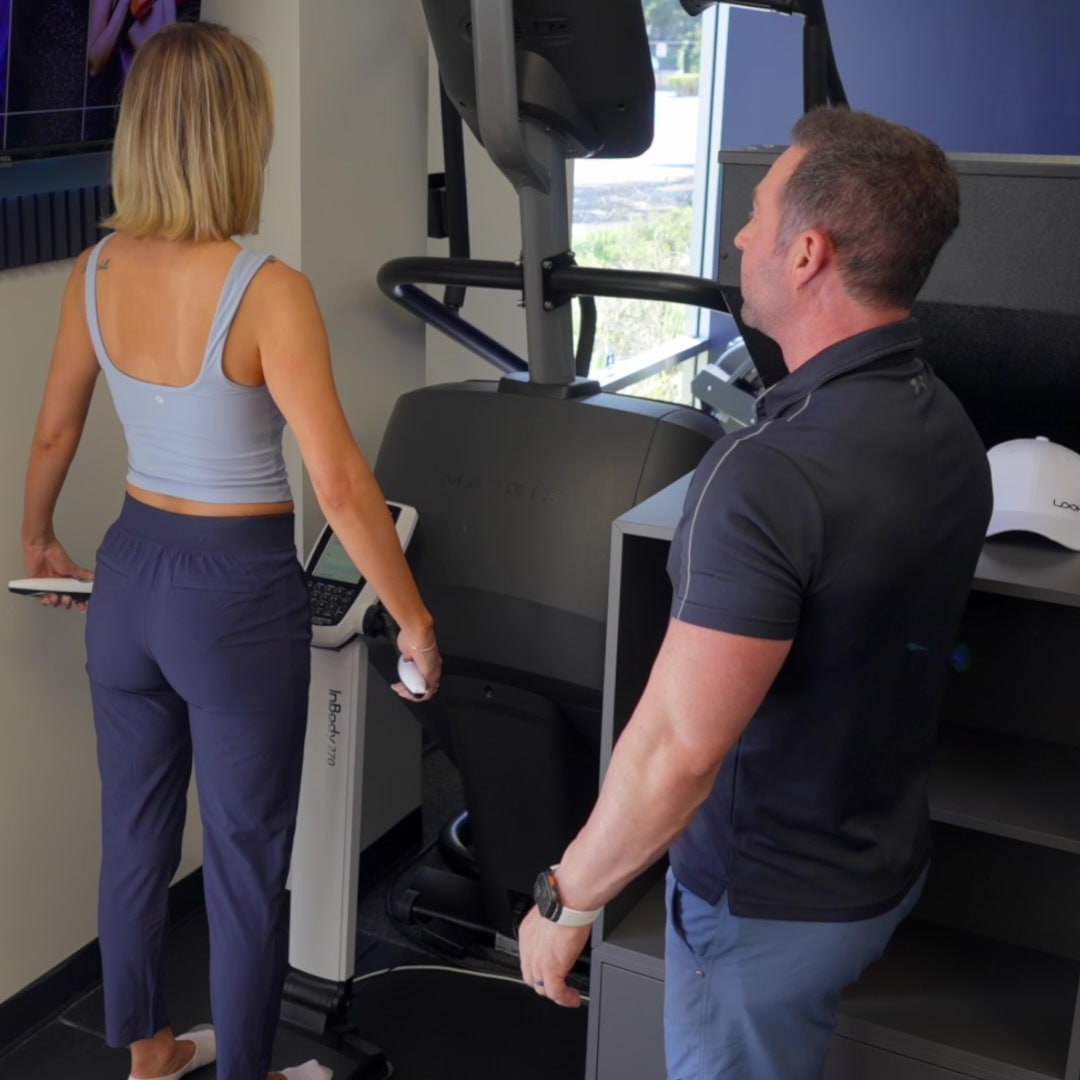
A body composition scan can. It takes the same body the scale sees and splits it into parts: how much of you is lean mass, how much is fat, and how that’s distributed. Every client here starts with one, and comes back to it.
The scale measures one thing, and hides the rest
Step on a scale and you get a single figure that includes muscle, fat, bone, organs, the water you’re carrying and the breakfast you just ate. Two people at the same height and the same weight can look and function completely differently, because the make-up of that weight is different.
That’s why the scale can be so demoralising. It moves for reasons that have nothing to do with your training — salt, sleep, a hard session two days ago, where you are in your cycle — and it stays still at exactly the moments you’re making the most progress.
What the scan separates out
A body composition scan gives you the parts instead of the total:
- Lean mass — the muscle you’ve built and, more importantly, the muscle you’re keeping.
- Fat mass — the actual amount, not a guess from a height-and-weight chart.
- How it’s distributed — where you’re carrying it, which is usually more informative than the total.
Put those three next to each other and a flat scale reading becomes readable. Same weight, more lean mass, less fat is a very good six weeks. The scale would have called that a failure.
Why “losing weight” can quietly go backwards
Weight comes off in two forms, and you don’t get to pick which one by accident. Lose it fast with no resistance training and a chunk of what leaves is the muscle you’d rather keep. You end up lighter, softer, and weaker — and because muscle is metabolically expensive tissue, you’ve made the next round harder than the last one.
This is the single biggest reason we scan rather than weigh. It’s also why it matters more than ever for anyone losing weight quickly, including clients using a GLP-1 medication, where the weight can come off fast enough that nobody notices what’s leaving with it.
What we do with the numbers
A scan on its own is just data. What makes it useful is what gets built from it:
- A baseline. Where you actually are on day one, in writing, before anyone promises you anything.
- A target that isn’t a weight. Usually it’s “hold this lean mass while that fat number comes down” — a far better instruction than “eat less”.
- A check every few weeks. If lean mass is drifting down, we change the training or the food before you’ve lost a season to it.
That’s the whole argument for measuring: not so you have a number, but so you find out early when something isn’t working.
Where to get one
The scan is part of the Deep Health Assessment — 45 minutes, complimentary, at the studio in Irvine. It comes with a movement assessment, a look at how you’re eating and training now, and a plan built from all three. You keep the plan whether or not you train with us.
If you’d rather ask a question first, call or text the studio. It’s a short conversation and it costs you nothing either way.